Saturday, October 23, 2010

Storytime Saturday - Lena Beilstein's marital adventures

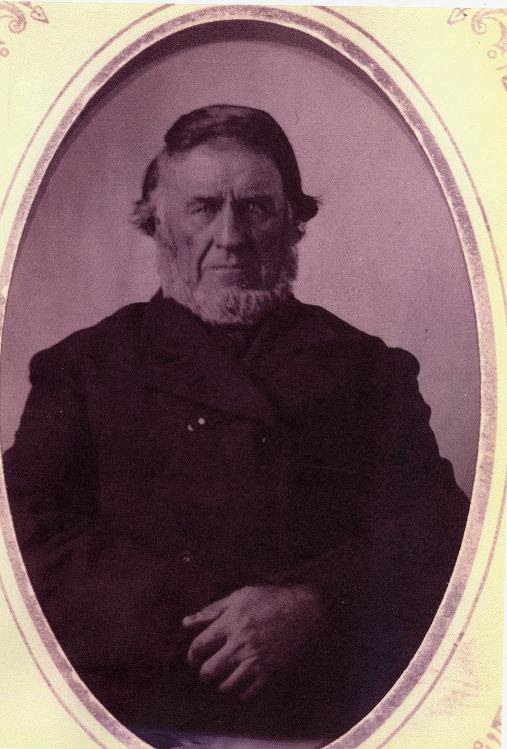
Today's post is all about my great-great-grandmother, Philena Emily Beilstein. She was born 26 Feb 1888 in Chicago, Illinois to Jacob and Amelia (Wachter) Beilstein. She was the younger of the two surviving children of this marriage (she had an older sister named Annie Margaret, or Maggie), and grew up in Illinois and Pennsylvania. She lived in Pennsylvania in 1900 at the time of the census, yet by 1903 she had found her way out to Carbon county, Montana, and was married to David M. Briscoe, a native of New Mexico from a large Mormon family (though it seems he himself never joined the church). Finding this marriage was a bit of a surprise, as the first marriage I knew about for her was in 1908 to Clarence Johnson. I was actually trying to find a record of her marriage to Clarence on the FamilySearch beta site, when I found the marriage to David Briscoe. My mom and grandma new nothing about David, which makes me wonder if my great-grandma Edna (Philena's oldest daughter, who told my grandma a lot about her mom) even knew about him. His mother and siblings were living in Carbon county, Montana at the time of the 1900 census, so how Philena met him and decided to marry him is a total mystery. Also, the fact that David came from a Mormon family is very interesting, given some things I've recently learned about the end of Philena's life (which I'll write about later). As far as I know, this is the earliest contact any of my family lines had with the LDS church (assuming that Philena had some kind of contact with David's family). This is very interesting to me, given that one of Philena's daughters (Elsie), granddaughters (my grandma), and the whole family of a great-granddaughter (my mom and our family) all joined this church. Funny how life keeps going in circles throughout the generations.

A quick but interesting sidenote about David Briscoe - he's one of the rare cases of people listed in the same census twice, the 1900 Montana census in this case. In one entry, he's listed as the servant of Henry Foust, and the other he's listed with his mother and siblings.


Her marriage to David didn't last long, because Philena (or Lena as she was often known) married again in 1908, to Clarence Johnson. I have recently obtained a scanned copy of two postcards Lena wrote to her mother, Amelia, while married to Clarence, one of which gives her address as 214 South H Street in Livingston, Montana. So it seems she stayed in Montana during the time of these two marriages (she ended up leaving Clarence towards the end of 1910). I have been unable to find any record of children born to either of these marriages, so as far as I know Lena walked away from these two marriages with no kids.
That changed when she met her next "husband", Ernest Craddock. I put husband in quotations because as far as we know (we being me, my grandmother, and other researchers of this family) Lena and Ernest were never officially married. But they got together shortly after the 1910 census was taken, as my great-grandmother Edna was born to them in 1911. Edna was followed by three more girls - Hazel, Elsie, and Grace. The family stayed in Montana at least through 1920, and were living in Granite, Montana at the time of the 1920 census.

After the 1920 census, I'm not sure where she went. I know from what my grandma has told me she left Ernest in the mid 1920s and was involved with several different men (aside from the three mentioned so far) over the course of her life, including Art Palmer, Ed Layfield, and Clarence Roper (Clarence Roper being the last one). I'm not sure at this point if she actually married anyone after Ernest, but Grandma says Lena was in Butte when her grandson James Harris Jr. was born in 1931, so that would point to her being in Montana for the 1930 census. But not knowing what name to search for, or what county she might have been in, I haven't been able to find her yet.

I've got more to write about Lena, but that will have to wait for another post. Stay tuned for Part 2 of Lena Beilstein's marital adventures.

Thursday, October 21, 2010

Treasure Chest Thursday - The Scribners

This is a family crest for the old Scriven family of England. My Scribner ancestors (who I've been told descend from the Scrivens) supposedly have authorization to claim this crest as theirs. I haven't gotten around to verifying it yet, but I thought it was a pretty interesting image, so here it is. I have traced my Scribners back to Zachariah Scribner of New Hampshire. He was born about 1817 in Merrimack, New Hampshire, and was the father of six children from two wives, Judith Sawyer and Mariah Jeanette Beardsley. I'm descended from his second wife, Mariah. Zachariah met and married Mariah in Minnesota (how's that for a tongue twister?), where he and Judith had moved to and where Judith had died. They had four children in five years, and later relocated to Montana, where Zachariah died in 1901.

Mariah was originally from Ohio and had been previously married to Norton Johnson. They were the parents of at least four children, and moved to Minnesota sometime between 1854 and 1860, the birth years of their second and third children. Norton died in 1864, leaving Mariah a single mother of four children ages 12, 10, 4, and 2. Mariah married Zachariah three years later (while he was raising two teenagers of his own, a boy and a girl). Altogether, they had ten children from four parents -quite a mixed family! After Zachariah died, she moved out west to Washington state and lived near her oldest child, Mary (Johnson) Perry. She died in 1911, ten years after her second husband.

Sorry for the brevity of the post, but at least it's something, right? I'm still working on the post about Lena, which will be a lot fuller. More full. Better.

Quick note

I haven't forgotten about my blog! I'm in the middle of a big post about my great-great-grandmother, Philena Beilstein. It's more complicated than I first thought, and the more data I gather, the more it takes to sort it and verify it and analyze it. I'll post it as soon as it's ready.

Wednesday, October 13, 2010

Treasure Chest Thursday - My latest acquisitions

To help me in my quest to collect and preserve family artifacts, my mom combed her house and found a few items, most of which I knew nothing about, and gave them to me.

This is a time table schedule for the Northern Pacific Railway Company from 1947. I'm not sure if it was my grandpa's or great-grandpa's (mom wasn't sure either), as both of them worked for the railroad. If it's my grandpa Fred's, he would have been 21 at the time, so it's not unreasonable that it's his. If it's his dad Fred Sr.'s, he would have been around 63, so it's not too unreasonable that it's his either. I'll probably end up asking my grandpa about it, and I'll post the update here.
UPDATE: I asked my grandpa, and the schedule is his. He started working for the railroad on October 1, 1947, and this was their current train schedule.

This is a ribbon my grandmother got for her participation in the Siskiyou County Fair in 1964. She was about 24 at the time, and she, my grandpa Tom, and a friend of theirs (don't know his name) played in a country band they called Kountry Kuzzins. Their band marched and maybe played in the parade, and got this ribbon for their efforts. Pretty cool!

This is a death certificate for Olga (Joseph) (Haft) McKeown, my great-grandmother's older sister. This one I knew about, as I'd asked my aunt to pick it up for me from the county clerk in Butte, Montana, along with 2 or 3 other death certificates. However, I was living in Utah at the time going to school, so my aunt was going to mail them to my mom, or give them to her when they visited, or something. I totally forgot about them (even though I had been the one to request them!) and was pleasantly surprised to see they were in pristine condition, even 7 or 8 years later. My mom really knows how to store things well!
In the future, I plan to take the information I gather from these items and try to dig up a few more clues (maybe a newspaper clipping about the parade? or some info on the trains my grandpa/great-grandpa worked on, or something), and I'll post a follow-up.
Thanks mom!

Wednesday, September 29, 2010

Wisdom Wednesday - The Montana State Orphan's Home

I'm back to working on my old project (that I was doing before the beige photo album project) of going through my files and documents and verifying that everything is entered into my database. While taking a few minutes last night to enter a couple census records on my Craddock ancestors (my great-grandma was Edna Craddock, one of two great-grandparents I actually got to meet, and the only one I actually really knew), I stopped at the 1930 census record of my g-grandma Edna's sisters Grace and Elsie. There were little girls at the time, living in the Montana State Orphan's Home (later called the Montana Children's Center). They weren't orphans really, as both parents were still alive and would be for years to come, but they couldn't afford to take care of the girls (there were four altogether) so they put them in the Orphan's Home for a while. It never really hit me until last night that this was how my great-grandma lived through the Great Depression - basically like an orphan.

Anyways, I decided to see if there wasn't any info on the Internet about the Orphan's Home, so I headed to Google searched for Twin Bridges Montana Orphan's Home. What I found was a website for the property owner of the now abandoned Children's Center. The main page had a bunch of pictures that cycled through like a slide show, so I saved a bunch of them to my hard drive (it was really helpful that they were labeled, so I knew a little bit of what I was seeing). Then I noticed that they had a history tab at the top, so I clicked on it. There I found a bunch of old photos from the 1930s and forward - staff photos it seemed mostly, and of the grounds from different points and at different times of the year. This was really interesting, to see the house as it would have looked to my great-grandma while she was there, and maybe some of the workers she knew.

But wait - there's more! They also had a group of buttons on this page, with a label that said "select era to see more photos", and one of the buttons was 1930! I went to that page, and found a whole slew of pictures - more pictures of the staff, but a lot of pictures of the kids in the orphanage, as well as pictures of the animals they had at the orphanage (who knew orphanages had animals???). Hope does spring eternal, so I went through all the pictures, hoping to find one or two of my great-grandma and/or her sisters. Sadly, there weren't any pictures of my family up there, but I did find one very interesting picture. They had a photo of Ruth Morris and Madeline Sabo, taken about 1935. Those names sounded familiar for some reason, so I went back to the census record for Grace and Elsie. Sure enough, they were on the same census page! Madeline is listed the next line down from Elsie, and Ruth is just a couple lines up from Grace. It kind of took me back for a minute, looking at these two young girls, who in all likelihood knew my great-grandma and her sisters. Were they friends? Did they fight? I don't know, but it's fun to think about. It also brought home that this was an orphanage, and (from what I read on the orphanage's website) some kids never got to leave, even died there. I'm glad that fate didn't befall my ancestors, but sad that it happened to people in other family trees.
So the wisdom I gained about my great-grandma's life - a view of the orphanage she lived in, more info about conditions and life there, and even a picture of some of her fellow 'inmates' (as the census refers to them) - was a lot more than I bargained for from what was meant to be a quick internet search. But that's what I love about genealogy - it's hard to find what you're looking for, but sometimes, you hit the jackpot.

Monday, September 27, 2010

The Wagner Bros lumbermill

For this blog post, I thought I'd put up some more pictures from the beige album. There are so many to choose from, I could easily spend weeks or months posting on different themes from just these pictures. Here are some of the ones I found most interesting:

This is my great-grandfather Charles Wagner (left) and his brother Ralph Wagner, part way up one of the trees they were felling. Look how tiny they are compared to the tree! I can't imagine how big the whole thing must have been, or what it took to chop it down. Notice how they had to wedge boards in to stand on. I remember my grandma saying this was part of the felling process, but I can't remember exactly how (I didn't have my recorder on me when she told me).

Here's a section of a tree all tied up and ready for transport to the mill. Wonder how many truckloads like this it took to take a whole tree?

Sometimes family would come out to the forest and visit, and even pose for silly photos like this one. This is my great-great-grandmother, Mary Hoffman. I like this, because it shows that while my great-grandfather knew how to work, it also shows he took time out for family fun as well.

Here's another photo of family visitors to the worksite. The ladies are Claire Wagner (Ralph's wife), Rosie Wagner (Charles' wife), Mary Hoffman (Rosie's mother), and Blossom Wagner (Rosie's daughter and my grandma).

This is one of the trucks they used to haul the trees from the logging site to the mill. Can any of you truck afficianados out there tell me what type of truck this is? I'd like to know!

These photos are of the mill itself. Not being familiar with the milling process, I couldn't say what exactly is going on, but it looks very busy! I'm sure it was terribly loud, with all the machinery and saws going, plus the trucks hauling trees in and lumber out, and the constant moving of lumber everywhere. But as my great-grandpa did this for many years, he must have enjoyed it. Or at least gotten used to it.

Wednesday, September 15, 2010

Wisdom Wednesday - what I learned from 838 old photos

After going through the photos I've scanned and saved, I realized that I know a lot more about my great-grandparents Charles and Rosie (Sitzman) Wagner than I did before. I'll post a few pictures, and tell you what each one taught me.

1. My great-grandfather and his brothers owned a lumber mill. I learned this from a picture of one of the trucks from the lumber mill my great-grandpa worked on - with the words Wagner Bros on the side. I've known for years he worked for the mill, but until that picture came along, I had no idea it was HIS mill. I'd like to find something about the mill - maybe a mention in a city directory, or a newspaper ad, or something about the mill. Maybe I'll start collecting things for each of my ancestors' occupations...once I get a bigger house, that is.

2. My great-grandparents knew how to ride horses, and apparently really enjoyed it. Most of the pictures I'd seen of them were of city scenes - pictures of the house, their farm, traveling different places, etc. I don't think they ever owned horses, so I never would have thought of them as riding them much. But apparently they did. This is a big thing to me, as my own experiences on horseback are limited mostly to one old horse named Old Shoes, which I rode on my honeymoon and which tried to buck me off after biting the horse my wife was riding. Needless to say, I'm not as much of an equestrian as my ancestors were. :)

3. They loved the outdoors. There are a LOT of pictures like this - mountain scenes, views of different lakes, photos of their annual moose hunting trips up to Canada, and a whole two-page spread of pictures of the trail up to and inside the Lewis and Clark Caverns in Montana. This I can relate to. Even if I don't care for spending a week in the woods hiding from bugs in a tent, I can still appreciate the beauty of nature, and love seeing the view from a mountaintop (or hilltop, as those are more accessible :) ).

4. My great-grandpa was an amazing woodworker. He not only knew how to cut down trees, he knew how to work the wood from raw timber to finished product. He even built his own house! Not to mention several other houses in Monroe, Washington. A lot of those houses, according to my dad, are still standing. I'll have to ask him to take me up there one of these days to take pictures of them. It just amazes me that he could cut the trees down, cut them into lumber, design a building, and (with the help of his brothers) turn the lumber into a finished house - all without going to other sources for help or labor.

5. They were very social people. My great-grandma was involved in a few different clubs - the Pocahontas Lodge, the Home Demonstration Club, and maybe some others (unless she just liked getting all dressed up just to get together with friends). One interesting page had a photo of one friend named Ethel taken in the 1950s, and another photo of the same woman taken in 1972. So my great-grandma made long-time friends, which I think is pretty cool. There are many pictures of family friends, many of whom my grandma remembered by name. I don't know if I could name my parents' friends in a photo, so this kind of shows me where I have room to improve on.

6. My great-grandparents loved their family. This is abundantly evident by how many pictures they have of their parents, siblings, cousins, nephews and nieces, and grandchildren. There are probably several hundred pictures of just my Aunt Eileen, who was Charles and Rosie's first grandchild, playing with friends, dressed up for the dancing and skating events she participated in, etc. One of the hardest pictures to see (though it technically came from a different album) was a photo of my great-grandparents and their kids Blossom (my grandma) and her brother Howie visiting the grave of their youngest child, Charles Wagner III. Grandma Blossom and Uncle Howie were smiling, but Rosie and Charles just looked so sad, even years later. I can't imagine losing one of my children at such a young age (Charles III was only 10 when he died), so I can understand why they looked so sad. But, on the other hand, it really shows how much they valued their family, and how much they loved each other.
I'm sure there's more I've picked up from some of the other photos, but I think that's a good start. It's a remarkable feeling - getting to know someone you barely even met, even 25+ years after they've died. But now, my great-grandparents aren't just names on a pedigree - they're people that I know and love.